Why Being Qualified Isn’t Enough: How to Communicate Your Value and Get Promoted [Book Review]
The key takeaway? Qualified Isn’t Enough. To be recognized for your efforts and results, you must learn to communicate your unique value proposition, how others can effectively work with you to maximize results, and how to position yourself through your strengths, values, and differentiators.
A few months ago, I found myself in a familiar coaching conversation. A highly capable leader sat across from me and said, “I don’t understand. I’m doing everything right. I get strong feedback. I deliver results. But I keep getting passed over.”
If you’ve ever felt this, you know the frustration. It’s confusing. It’s discouraging. And it’s surprisingly common.
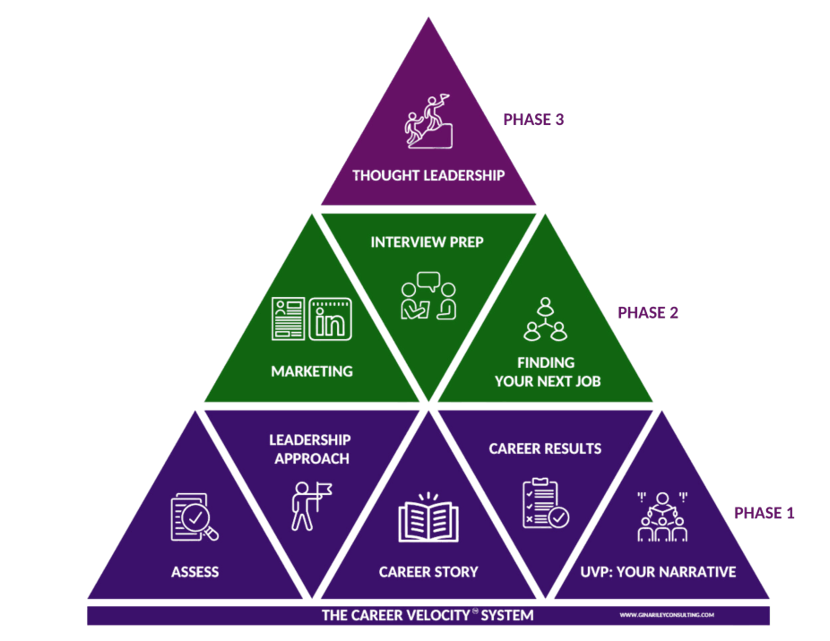
Around that time, my friend Gina Riley, a highly sought‑after executive search and career coach, gave me a copy of her new book, Qualified Isn’t Enough, to help me firm up my messaging around the value I provide as a coach. The book walks through her Career Velocity™ system and related exercises, specifically designed to help executives and aspiring leaders define their Unique Value Proposition and execute an effective job search strategy.
I worked through the exercises, and I kept coming back to a different question:
What if this work isn’t just about getting the next job?
What if it’s about becoming more visible, influential, and promotable where you already are?
Because most of the leaders I work with are not job searching. They are already inside organizations. They want growth, impact, and recognition, without starting over somewhere new. And Gina’s Career Velocity™ system is incredibly powerful for exactly that.
The hard truth about why high performers and strong leaders get stuck
The reality I see again and again in my coaching practice is that high performers and hyper‑achievers often believe that if they work hard, get results, and care deeply, recognition and promotion will follow.
Unfortunately, that’s not how most organizations work. [Related: How Women Rise & What Got You Here Won’t Get You There]
One of the biggest reasons leaders get stuck or passed over is not a lack of capability. It’s a lack of differentiation. They are reliable but not visible. Competent but not seen as strategic. Hardworking but not clearly positioned. Over time, this creates a frustrating gap between performance and perception.
The leaders who land promotions, gain visibility, and become trusted voices inside their organizations know how to:
Communicate their value clearly
Articulate the problems they solve
Manage their internal reactions under pressure
Show up with grounded confidence
Help others understand their impact
They don’t just do good work. They are known for specific, high‑value contributions. If you cannot do this, your work may remain invisible, no matter how strong your performance is.
This is where the exercises in Qualified Isn’t Enough stand out. They are not theoretical. They force you to get clear about who you are, how you think, and the value you provide. The first two chapters alone completely shifted how I position myself and communicate my impact as a leadership coach and facilitator.
Key Concept: Developing Your Unique Contribution Statement
One exercise that changed how I describe my work was creating a clear Unique Contribution Statement, which helps you describe yourself in a succinct, ‘attention-grabbing’ statement.
Until recently, I described what I do as a coach like this: “I help people manage their time, stress, and energy.”
It wasn’t wrong. In fact, it’s exactly what I do. But it is also forgettable.
Through Gina’s exercises, I looked at patterns across my client work. What problems do leaders consistently bring? What outcomes actually matter? What changes after we work together?
This shifted how I viewed the value I provide to my clients, and shifted how I describe my work. I now say: “I help high‑performing leaders reduce decision fatigue and emotional overload so they can think strategically, communicate with clarity, and lead sustainably without burning out.”
Same work. Different clarity. Completely different response.
This shift has changed the kinds of clients who reach out, the way organizations understand my value, and the depth of conversations I’m invited into. And this is exactly the kind of shift many leaders need internally to accelerate their own growth and visibility.
Key Exercise: Defining “Rules for Working With Me”
If you’ve been around my work for a while, you know I’m a fan of clear, kind, and direct communication. When expectations are clear, performance improves. [Related read: Harness the Power of Influence with These Skills]
That’s why I loved Gina’s exercise on translating your strengths and values into practical rules and guidance for others. In other words, how should people work with you to get the best results?
I created three simple rules I now share with clients:
Come with intention. You don’t need all the answers, but clarity accelerates the work.
Be open to refinement. We will sharpen your thinking. Growth requires feedback.
Say what you’re really thinking. Coaching works when we work with the truth, not the polished version.
This has dramatically improved session outcomes. I now use this concept with leaders and teams so expectations are clear, tension decreases, and results improve. It’s not about being demanding. It’s about reducing confusion and increasing impact.
Key Concept: Adaptive leadership as a differentiator

In today’s environment, technical skills alone rarely differentiate leaders. There is a global pool of capable, qualified professionals. The real differentiator is how leaders approach complexity, uncertainty, and human dynamics. Exercises like mapping your career journey help uncover recurring themes and strengths, such as:
The kinds of problems you solve
The environments where you thrive
The leadership identity you are building
Client Example: One client I partner with in a senior sales role used this exercise to uncover something that had been hiding in plain sight for most of his career. He is currently the Vice President of Sales in Canada for a data intelligence company. On paper, his success looked like strong execution and consistent revenue growth. But through mapping his career journey, he realized his true differentiator was his ability to build deep, trusted relationships and advocate fiercely for both his customers and his company. His clients consistently gave him the highest NPS scores in the organization, and Canada led globally in engagement and conference attendance. This clarity helped him reframe his value from closing deals to strategic relationship building, long‑term growth, and sustainable impact.
Personally, this exercise helped me articulate something I had always known but never clearly stated: most of the problems my clients bring are not technical. They are adaptive. They involve letting go of control, having difficult conversations, shifting long‑standing patterns, moving from problem‑solver to strategic leader, and building empowered teams that can think and act independently. This reframing has helped me position my work as deeper and more strategic.
Key Concept: Becoming a thought leader inside your organization
Many leaders ask how to position themselves as thought leaders. Some go on to present on stages or build strong external platforms. Others simply want to be recognized internally as a trusted voice.
For many, the idea of creating content feels overwhelming and exhausting. As a business owner who largely grows through referrals but still needs to maintain a professional presence, I understand this tension.
In chapter nine, Gina brings everything together and helps you identify your core ideas, your audience, and practical ways to share your thinking.
From this, several core themes emerged:
Mindset + Energy = Impact: Leadership effectiveness starts with internal state.
The Hidden Cost of High Performance: The behaviors that create early success often limit long‑term leadership.
Human‑Centered Leadership Is Strategic: Emotional intelligence and psychological safety drive performance.
From Proving to Owning Your Value: Many capable leaders, especially women, remain stuck in proving.
Clarity Over Control in Uncertain Times: Leaders cannot control complexity, but they can create clarity.
These themes now shape how I show up with clients, organizations, and audiences. They also make it easier to communicate consistently and authentically.
Once you’ve identified your key themes, additional exercises help you identify your audience, where they spend time, ahd what micro-content you should be creating to cater to that space.
This is what turns expertise into influence.
Final thoughts
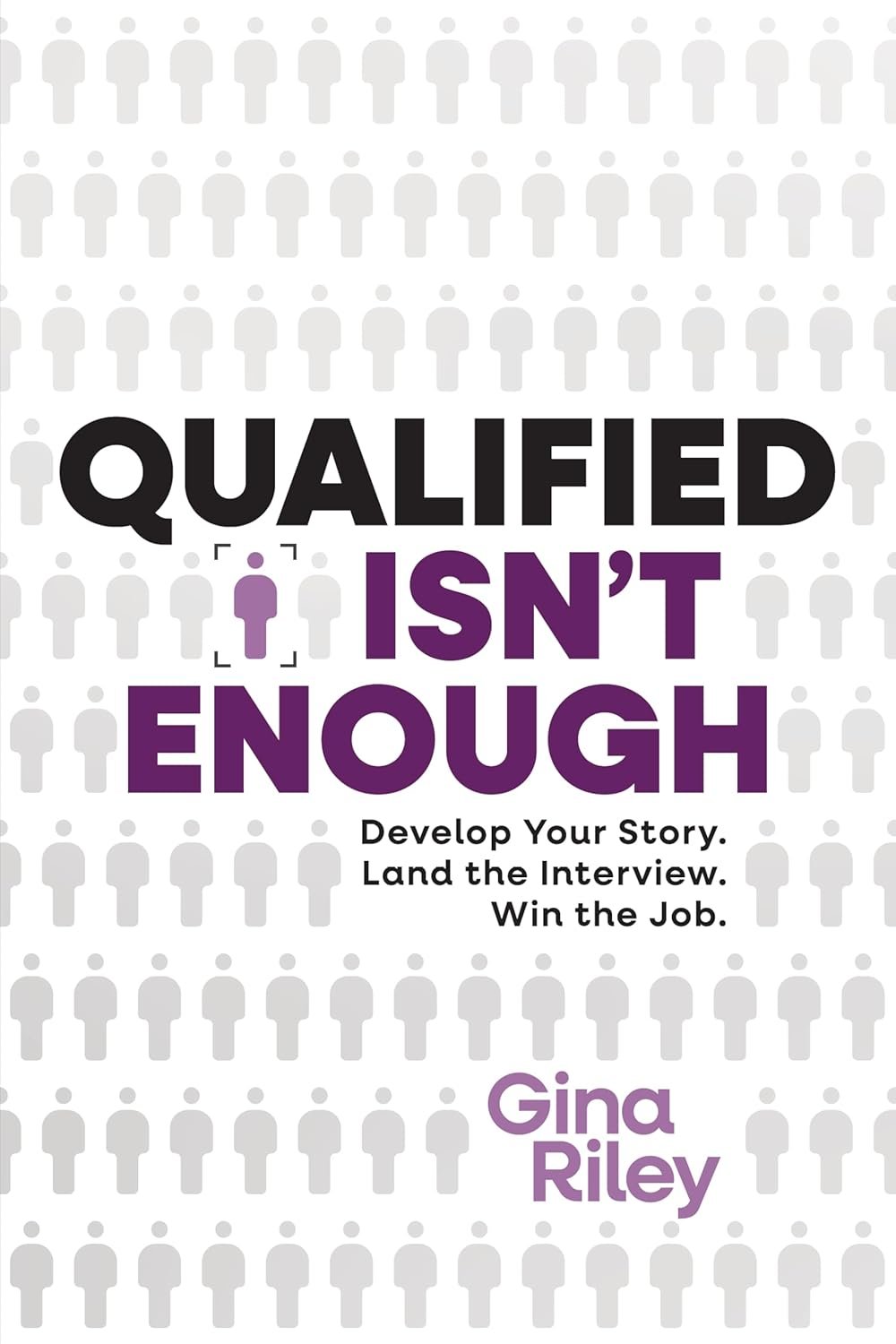
If you feel overlooked, unclear about your differentiator, or ready for your next level of impact, I highly recommend working through Qualified Isn’t Enough. The exercises are invaluable for leaders who want greater clarity, visibility, and impact. They are simple, practical, and deeply revealing.
I now integrate many of these tools into my coaching practice, and the results have been meaningful for both my clients and my own growth as a leader and business owner. Because being qualified isn’t the goal. Being understood, trusted, and sought after is.
At the end of the day, clarity and differentiation can help you:
Build trust
Accelerate influence
Position you for promotion
Reduce burnout
Increase visibility
Strengthen confidence
And perhaps most importantly, shift you from always feeling the need to prove your value to owning it.
TLDR & FAQs
TL;DR (Too Long; Didn’t Read)
If you’re a high-performing leader who feels overlooked or passed over, the issue may not be your capability — it may be your differentiation. In Qualified Isn’t Enough, Gina Riley shares practical exercises designed for job seekers, but they are equally powerful for leaders who want to increase visibility, clarify their unique value proposition, and position themselves for promotion internally.
Through exercises like defining your Unique Contribution Statement, mapping your career journey, articulating your adaptive leadership strengths, and identifying your thought leadership themes, you can move from simply doing good work to being known for high-value impact.
Being qualified isn’t the goal. Being clearly understood, trusted, and strategically positioned is.
Frequently Asked Questions
Why do high-performing leaders get passed over for promotion? They focus on execution instead of differentiation. Without clearly communicating their unique value and strategic impact, their work can remain invisible despite strong performance.
How can I differentiate myself as a leader inside my organization? Clarify your unique value proposition, articulate the problems you solve, define how you work best, and consistently communicate your strategic impact. Differentiation is about positioning, not just performance.
What is a Unique Contribution Statement? A Unique Contribution Statement is a concise description of the value you bring, the problems you solve, and the outcomes you create. It helps increase visibility and promotion readiness.
What is adaptive leadership, and why does it matter for promotion? Adaptive leadership is the ability to navigate complexity, uncertainty, and human dynamics, not just technical tasks. It signals readiness for higher-level leadership roles.
How can Qualified Isn’t Enough help leaders who aren’t job searching? The book’s exercises help clarify your differentiators, define your leadership identity, and communicate your value more effectively, which increases internal visibility and promotion potential.