Book Review: Burnout by Emily & Amelia Nagoski. Why You're Exhausted and What Actually Helps
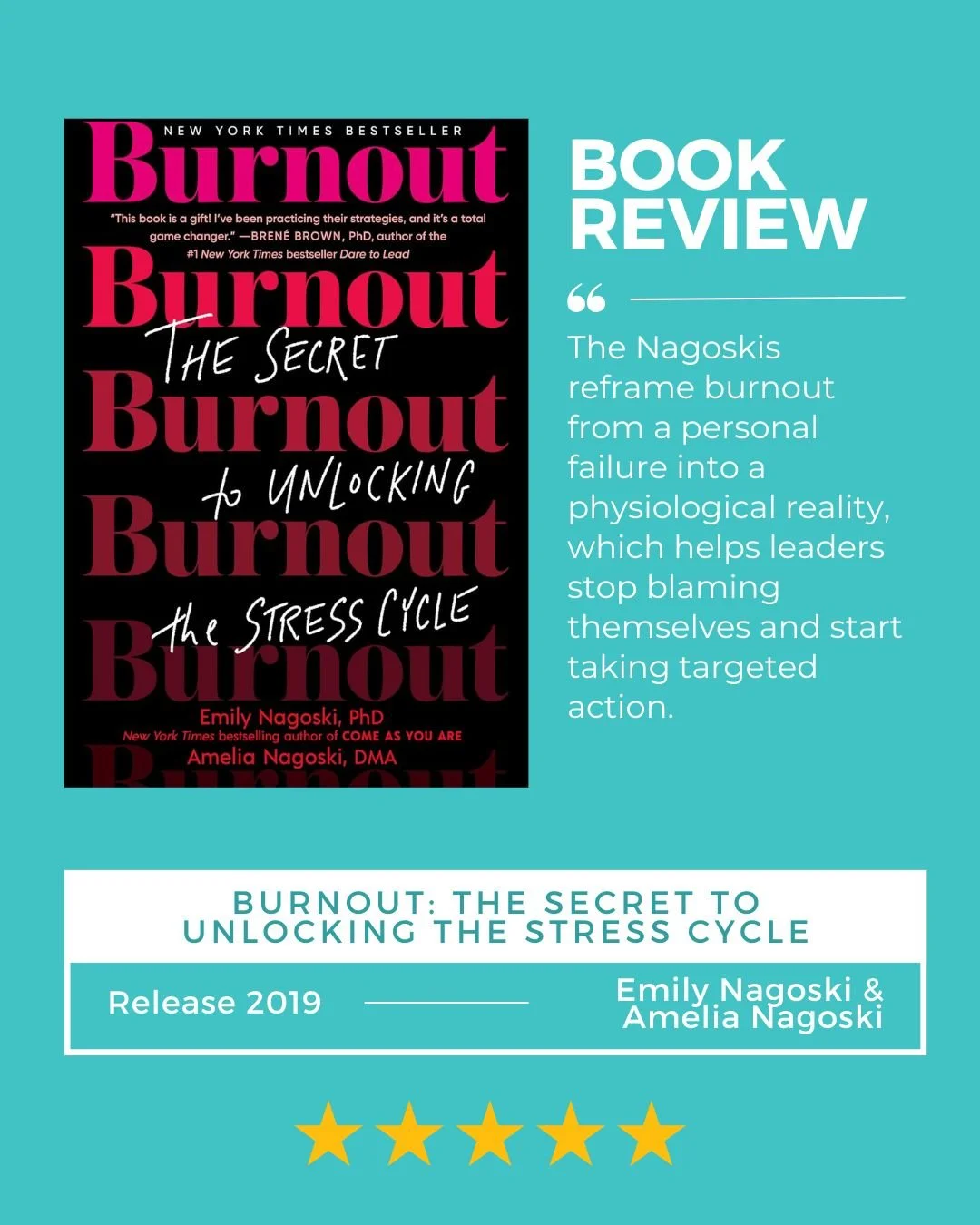
Why I Picked This Book
I pick up almost every book about burnout that crosses my desk because I work with it every single day in my coaching practice. Most of them say the same things: sleep more, do less, set boundaries.
This one is different. Emily and Amelia Nagoski are researchers, and they come at burnout from a biological angle that I had not seen explained this clearly before. The moment I read the chapter on the stress cycle, I thought: every client I have needs to read this.
The Big Idea
You are not burned out because you are weak, disorganized, or bad at time management. You are burned out because stress is a physiological process that requires completion, and modern life almost never gives it the chance to finish. The Nagoskis separate two things that most of us collapse into one: the stressor (the thing causing the stress) and the stress itself (the biological response in your body). Eliminating the stressor does not automatically resolve the stress. Your body still needs to complete the cycle.
Key Learnings
The Tunnel Metaphor
The Nagoskis describe burnout using the image of a tunnel. When you are in it, it feels like it goes on forever. But every tunnel has an end, and the way through is not to stop but to keep moving. This reframe alone has helped many of my clients shift from feeling trapped to feeling in motion.
📖 Keep reading: Emotional Intelligence for Stress Management and Resilience
Human Giver Syndrome
This concept stopped me cold. Human givers are people (disproportionately women) who have been socialized to believe their purpose is to give their time, attention, and energy to others, and that their own needs are secondary. Most high-achieving women leaders are operating from this unconscious script, which is why they are the last ones to refill their own tank.
Completing the Cycle is Not Self-Indulgent
The most important reframe in the book: rest, movement, and connection are not rewards for finished work. They are biological requirements for continued function. The leader who treats recovery as a luxury is the one who eventually stops functioning.
📖 Keep reading: Why High-Achieving Women Leaders Burn Out Faster (And What to Do About It)
Emotions Are Tunnels Too
Emotions, like stress, require completion. The Nagoskis explain that the reason suppressing emotions is so exhausting is that the emotional process does not stop when you push it down. It just runs underground, consuming energy the whole time. Leaders who allow emotional processing (in safe, appropriate contexts) are not less professional. They are more efficient.
The Bikini Industrial Complex
The authors take a sharp look at the external forces that tell women their bodies and worth are projects to be managed. This is not a detour, it is central to their argument about why women are disproportionately affected by burnout: the additional cognitive and emotional labor of managing one's appearance, likability, and perceived adequacy is a genuine and exhausting drain.
Actionable Steps You Can Implement Today
1. Move your body after stress, not just for fitness
After a difficult conversation, a high-stakes meeting, or a day where everything went sideways, take a 20-minute walk before you sit down to decompress digitally. This is not about burning calories. It is literally completing the biological stress response your body started. Your nervous system will respond differently than if you go straight from the meeting to your phone.
📖 Keep reading: The 5 Mindfulness Practices that All Leaders Should Have in Their Toolbox
2. Identify your cycle completers
Make a short list of the activities that reliably shift your physiological state: the things that, when you finish them, leave you feeling noticeably different than when you started. For some people it is exercise. For others it is a loud car singalong, a deep conversation with a friend, or twenty minutes of creative work with no agenda. Know yours and treat them as non-negotiable.
3. Name the Human Giver script when it activates
The next time you catch yourself minimizing your own needs, over-explaining your decisions, or feeling guilty for taking time for yourself, try saying internally: 'That is the Human Giver script.' Naming it creates distance from it. Distance creates choice.
4. Stop finishing the workday with screens

The Nagoskis' research is clear that passive screen consumption does not complete the stress cycle. It pauses it. Build one screen-free transition at the end of your workday, even ten minutes, to begin genuine decompression before the evening.
📖 Keep reading: The Mid-Year Mindset Shift: How Mindful Leaders Reset with Intention
5. Practice the 20-second hug
This is one of the most cited findings from the book: a genuine 20-second hug (or sustained physical connection) releases oxytocin and helps complete the stress cycle. Most of us hug for three seconds. Try twenty and notice the difference. This is relevant to your leadership only in that it reinforces how much physiological regulation is available through genuine human connection.
The Bottom Line
Burnout is the book I wish existed ten years ago, both personally and professionally. If you have ever wondered why the vacation did not fix you, why you can run on empty for months and then crash hard, or why doing everything right still leaves you feeling depleted, this book has your answer. It is scientific, practical, and written with a warmth that makes the hardest truths feel like relief instead of indictment. Read it, then pass it to every high-achieving woman you know.
📖 Keep reading: Why High-Achieving Women Leaders Burn Out Faster (And What to Do About It)
📖 Keep reading: Inner Excellence by Jim Murphy