Forest Therapy for Leaders: How Nature Helps You Stop Overthinking and Think Clearly
You’ve probably had this experience: You leave a meeting and immediately start replaying the conversation in your head.

Did that comment land the way you intended?
Should you have pushed back more?
What if the team interprets that decision the wrong way?
By the time you sit down at your desk again, your brain has already run through ten alternate versions of the same conversation.
That mental loop has a name: rumination. And if you’re a thoughtful, high-performing leader, you’re especially vulnerable to it. Many of the women I coach are incredibly capable senior leaders within their organizations. They know their work. They know their teams. And most of the time, they already know the right decision.
Yet their minds still circle back to the same questions:
What if I’m missing something?
What will people think?
Should I double-check before moving forward?
The issue is not competence. The issue is mental noise. And when that noise goes unchecked, it drains the exact cognitive and emotional resources leaders need most.
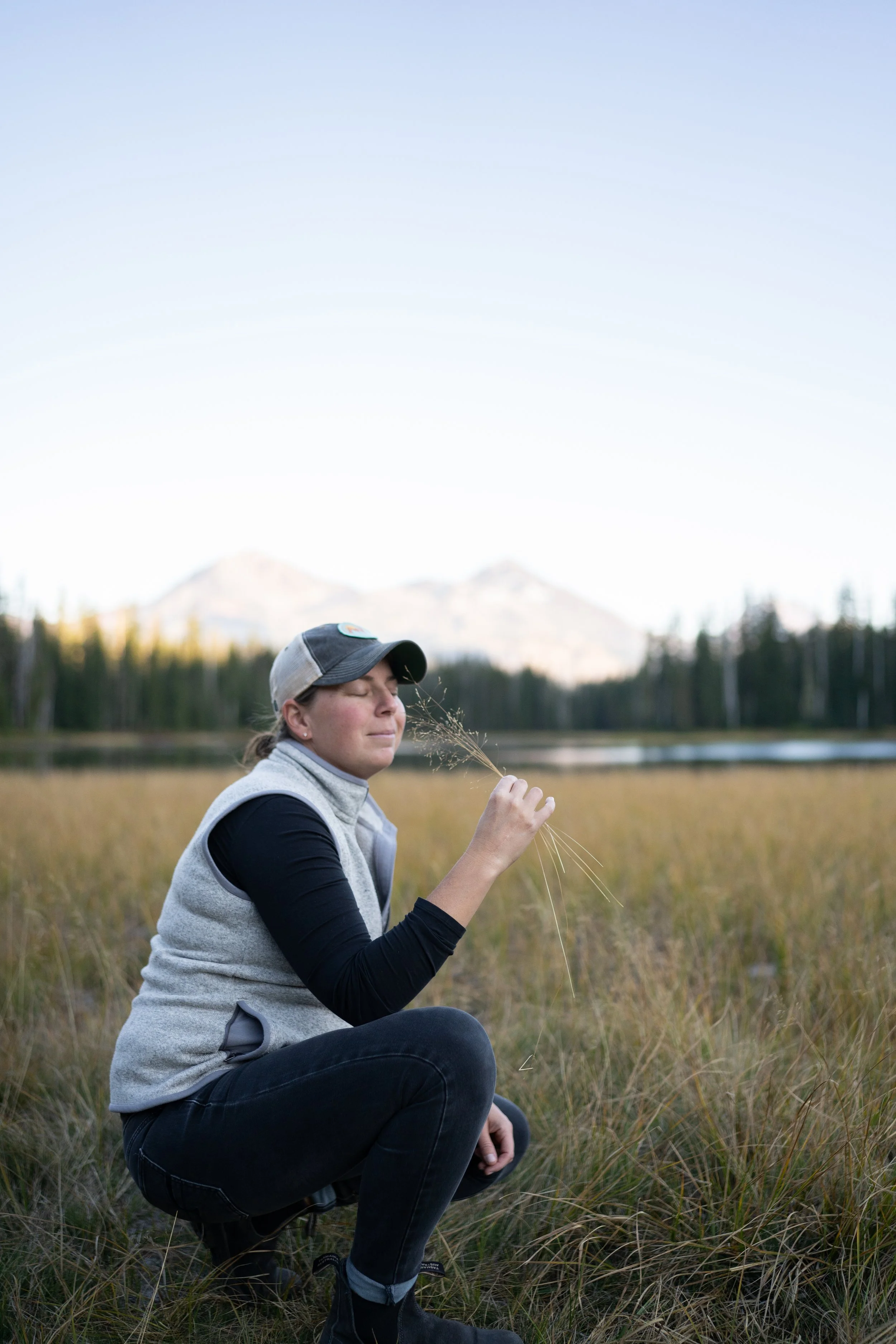
Can forest therapy help leaders stop overthinking?
Yes. Forest therapy helps interrupt rumination by shifting attention away from analytical thinking and back toward sensory awareness. Research shows that intentional time in nature can reduce stress hormones, restore cognitive focus, and improve problem-solving. The result is often the same thing leaders are searching for when they overthink: clarity.
Key Takeaways: Forest Therapy and Leadership
Rumination drains leadership capacity. Replaying conversations and decisions consumes cognitive energy needed for strategic thinking and problem solving.
Your nervous system influences how clearly you think. When stress is high, the brain narrows attention and increases second-guessing.
Intentional time in nature helps interrupt overthinking. Natural environments can lower cortisol, restore attention, and improve cognitive flexibility.
Forest therapy shifts attention from analysis to sensory awareness. This helps regulate the nervous system and create space for clearer decision-making.
Even short periods outside can reset your thinking. Many leaders notice improved perspective and creativity after just 10–20 minutes in nature.
What Rumination Actually Does to Leaders
Psychologists define rumination as repetitive thinking about past events or possible future problems. Instead of helping us solve a problem, rumination keeps us stuck in the mental replay. Studies link chronic rumination with increased stress, anxiety, and decreased problem-solving ability.¹
In leadership roles, the cost is even higher. Leaders make dozens of decisions every day. Research on decision fatigue shows that cognitive resources are limited. When we spend too much mental energy revisiting one situation, we have less capacity for everything else that follows.²

The result looks like this:
Slower decision-making
Increased self-doubt
Emotional exhaustion
Reduced creativity and strategic thinking
And, most frustratingly, it’s the leaders who care the most about doing a good job who are often the ones who get stuck in these loops.
But there’s another piece most people don’t realize. The emotional reaction that started the loop was probably short-lived. Research on emotional processing suggests that the physiological life of an emotion often lasts about 60–90 seconds if we do not keep feeding it with additional thoughts and stories.³ After that, the body is ready to move on. What keeps the experience alive is not the emotion itself. It’s the narrative we keep replaying about it.
This is where presence becomes a leadership skill. Great leaders don’t stop thinking. They learn how to direct their attention.
They notice the story they’re telling themselves.
They question whether that story is useful.
And they choose where their energy goes next.
But knowing that intellectually doesn’t always make it easier to interrupt the loop. This is where nature becomes surprisingly powerful.
Why Forest Therapy Interrupts Overthinking
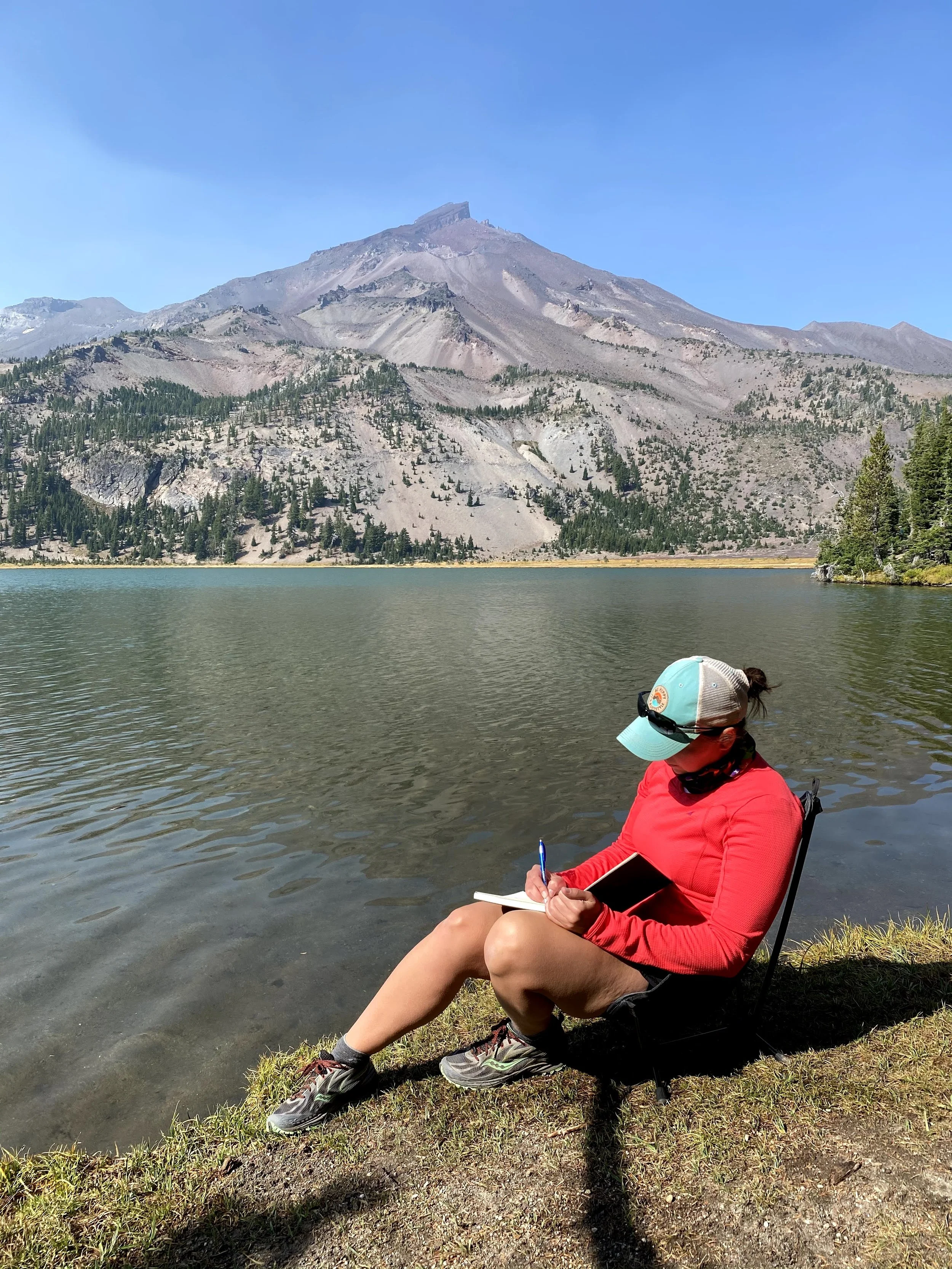
Rumination lives in the analytical part of the brain. It thrives on language, interpretation, and prediction. Forest therapy works through a completely different pathway. Instead of asking the brain to analyze more, it gently redirects attention toward sensory experiences such as:
What are you hearing?
What are you seeing?
What are you noticing?
This shift matters more than most people realize. When we engage our senses, the nervous system begins to regulate. Stress hormones decrease, breathing slows, and attention widens. A growing body of research shows that intentional time in natural environments can reduce cortisol levels, improve focus, and increase creative problem-solving.⁴ This is why many leaders notice something interesting after spending time outside. The answer they were struggling to find often appears once they stop trying so hard to think about it.
From a physiological perspective, that makes sense. When the nervous system settles:
cognitive flexibility increases
emotional reactivity decreases
pattern recognition improves
In other words, clear thinking returns.
The Leadership Skill Hidden Inside Sensory Awareness
One of the reasons I love bringing leaders into nature is that the same awareness we practice outside is the awareness that strengthens leadership presence.
Forest therapy, sometimes called forest bathing, is not hiking, and it’s not exercise. It’s a slow, guided immersion in nature designed to bring people back into the present moment through the senses. Participants move at a gentle pace and engage with the environment in simple ways: noticing sounds, textures, light patterns, and subtle shifts in the landscape. It sounds almost too simple. But simplicity is exactly what overworked leadership brains often need.

When leaders reconnect with their senses, they become better at noticing:
emotional signals in themselves and others
subtle shifts in team dynamics
unspoken tension in meetings
opportunities that require intuition rather than analysis
In other words, they begin to read the room more effectively.
The modern workplace tends to reward speed, analysis, and constant responsiveness. Those skills matter. But leadership also requires perspective, intuition, and emotional awareness. Those capacities rarely appear when our nervous system is overloaded. They emerge when we create space.
A Simple Practice to Interrupt Rumination
The next time you notice your mind looping on a problem, try this experiment.
First, write down the story your mind is telling.
Separate what you know for certain from what you are assuming. This alone often reduces the emotional charge.
Second, step outside if you can. Not to check email or scroll social media. Just to be outside.
Take a few minutes to notice what is around you.
The temperature of the air.
The sound of birds or wind.
The feeling of your feet on the ground.
You are not trying to solve the problem. You are simply allowing your nervous system to settle.
Third, return to the situation with fresh eyes.
Most people are surprised by how quickly their perspective shifts once the mental loop breaks. Clarity often returns faster than expected.
Why Leaders Need Nature More Than Ever
Leadership today requires constant decision-making, emotional intelligence, and the ability to navigate uncertainty. That level of responsibility takes energy.
Nature is one of the most accessible tools we have for restoring that energy.
It doesn’t require a retreat or a week off the grid. Sometimes it starts with something much simpler: stepping outside for ten minutes and letting your mind quiet down enough to see clearly again.
When leaders reconnect with presence, confidence follows. Not because every answer becomes obvious, but because they trust themselves to handle what comes next. And that trust changes how they lead.
If you’re interested in exploring this practice more deeply, I offer guided forest therapy experiences for leaders and teams in Central Oregon, and virtually through Zoom. These immersions create space for reflection, clarity, and meaningful conversation in a setting that naturally supports nervous system regulation.
Sometimes the fastest way to clear your head isn’t thinking harder. It’s stepping outside.
Want to Try Forest Therapy?

Article Sources
Nolen-Hoeksema, S. (2000). The role of rumination in depressive disorders. Journal of Abnormal Psychology.
Baumeister, R. F., et al. (1998). Ego depletion and decision fatigue. Journal of Personality and Social Psychology.
Harvard Brain Science research on emotional processing and neural activation cycles.
Park, B. J., et al. (2010). The physiological effects of Shinrin-yoku (forest bathing). Environmental Health and Preventive Medicine.